by Liz Cattaneo | Aug 28, 2014 | stories
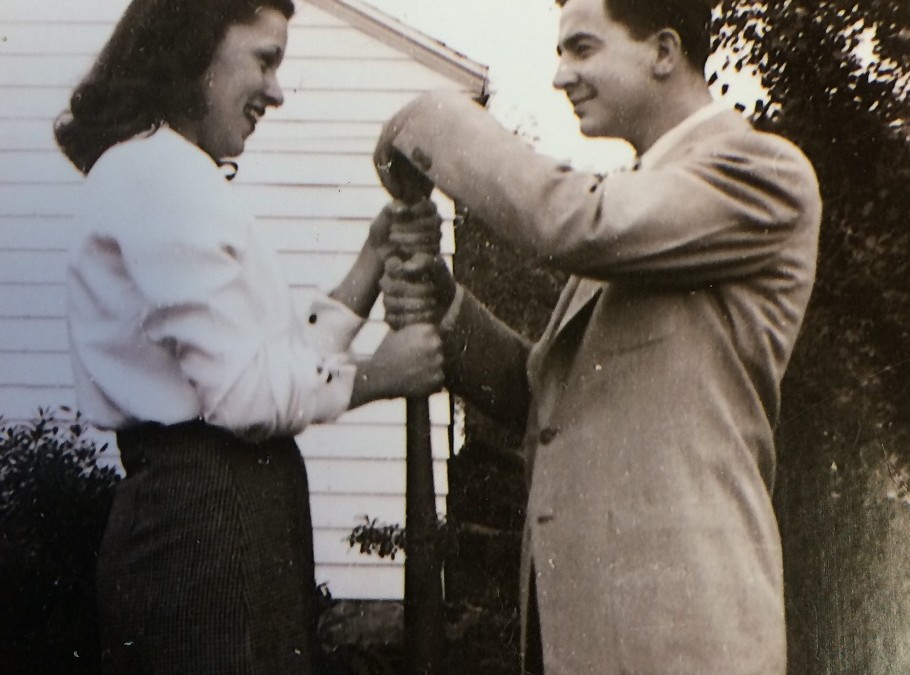
I grew up in a very small family and my late Grandpa played a huge role in my life. After he retired from his lifelong job at Inland Container, he and my Grandma moved from Indiana to live a mile away from where we lived in Ohio when I was about 10 years old so they could help my Mom raise me and my brother. It is not an overstatement to call my Grandpa a “national treasure,” as one of my brother’s friends proclaimed when we were in high school. He was honorable, warm, funny, kind and adorable. Jimmy O’Donnell was a true kid of the depression. He was mostly raised by his sisters in St. Paul, Minnesota. As a kid he worked as a grocery bagger and did whatever he could do to get any spending money. He enlisted in the Navy to fight in WWII. While in the war, he became pen pals with my Grandma. He continued to court her after the war and eventually moved to Indianapolis to marry her and begin a new life. He got a job in the warehouse of Inland Containers, a company that still makes corrugated cardboard packaging today. He rose up in the company after always being noticed for putting in extra hours, and going the distance. He worked for them for over 40 years and ended up being a manger overseeing their telecommunications needs. So Inland was always a source of stories from my Grandpa, and its logo was omnipresent at my Grandparents house. That company became his family and foundation, created stability for him, and allowed him...
by Sarita Gupta | Aug 28, 2014 | stories
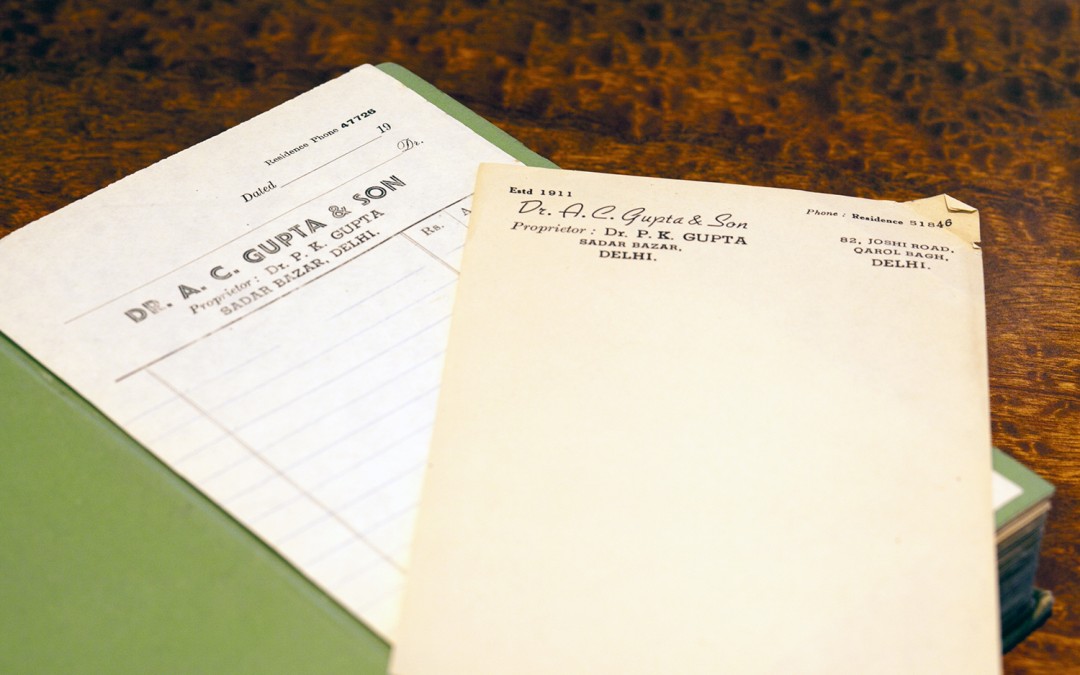
My maternal grandfather, S.N. Gupta, was a longshoreman in the Port of Kolkata in India. He began working on the docks in 1929 when he was 19 years old. When my grandfather was still quite young, his father became ill and passed away, so my grandfather had to work incredibly hard to provide economic stability for his whole family. He worked his way up through the shipping company, eventually becoming a co-owner, which allowed him and my grandmother to be incredibly generous, and to support their family and friends in pursuing their dreams of a better life. Because of my grandfather’s hard work, countless members of my family members were able to access education and achieve a level of success that would have otherwise been impossible. My grandparents were truly the patriarch and matriarch of the extended family, and built a home which became the gathering place for everyone and the site of many happy occasions. Because he lived in India, I only got to spend time with my grandfather for a few weeks every five years or so, but what I remember was his warmth, his great sense of humor, and his worldliness from years of exposure to other lands through his work. He was very encouraging of my parents when they moved to England and then to the U.S. in an effort to find a better life. His work and approach to life played a huge role in my immediate family’s ability to be economically mobile and to live in “new lands” well beyond anything they had imagined as kids. He died, having lived a very full...
by Ohm Youngmisuk | Aug 27, 2014 | stories
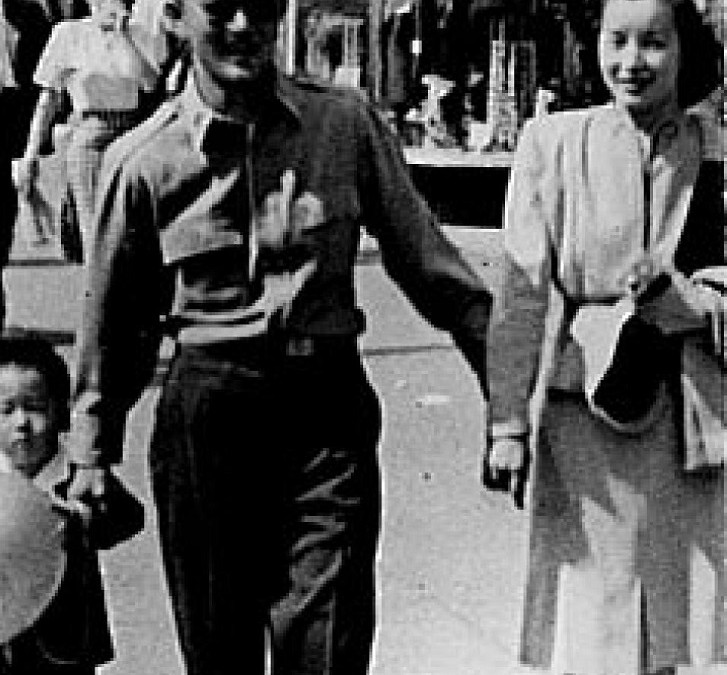
Retired Cleveland Browns linebacker Scott Fujita credits his grandparents for teaching him to persevere. As an article from The New York Daily News profiling his grandparents and his relationship with them explained, “Fujita’s grandparents, Nagao and Lillie, were dating in junior college in Ventura (Calif.) when Japan bombed Pearl Harbor in 1941. A few months later, President Franklin Roosevelt issued United States Executive Order 9066, ordering all persons of Japanese ancestry into internment camps. Nagao and Lillie, fearing that they might be separated, quickly married and were soon two of the 120,000 Japanese to be sent to camp. Like most Nisei – the Japanese term for Japanese born in the USA – Nagao and Lillie dealt with the less-than-ideal circumstances the only way they knew how – by making the most of it. While Nagao was away, Lillie taught typing and shorthand to English-speaking Japanese kids in the camp before giving birth to Rod Fujita. Nagao, who spoke four languages, went on to become one of the first bi-lingual attorneys in the state of California. Lillie Fujita doesn’t like to complain. It’s never been her style. Even to this day, the 89-year-old doesn’t gripe much about being wrongfully imprisoned in a Japanese internment camp during World War II. What drives Fujita the most is his grandmother’s fighting spirit. ‘I look at my grandparents and what they dealt with in the Japanese internment in Arizona. That sense of perseverance, of making the best out of an incredibly bad situation, has always been something I drew inspiration from. I always ask myself, what in the world do I have to complain...
by Mike Klis | Aug 27, 2014 | stories
Retired NFL tight end Shannon Sharpe said he had his grandmother to thank for his success on and off the field while growing up in Georgia. As an article printed right before he was inducted into the NFL Hall of Fame explained, “Sharpe’s Grandma Mary was living out her final days in the same nursing home where she once worked to put food on the table for her children, grandchildren, sisters, nieces, nephews and whoever else needed a bed with a leaky roof over it. ‘She was a hard worker,’ Elaine Keels, Shannon’s Spanish and remedial reading teacher at Glennville High, said in late June. ‘I think she was working all the time to take care of her family. I tell her every time when I stop by who I am and she tells me the same story, that Shannon is her baby.” As Shannon puts it, “My grandma told me, don’t get into trouble. I know how hard she worked to take care of her own nine kids and my mama’s three. And I just never wanted to hurt her. I never wanted to do something that would embarrass her.” Reprinted from: “Hall of Famer Shannon Sharpe has his late Grandma to thank,” The Denver Post, July 31, 2011 Photo: Former Broncos tight end Shannon Sharpe and his former high school track and football coach William “Billy” Hall meet up during a visit to his hometown of Glennville, Georgia, Thursday, June 16, 2011. (AP | Chris...

by Kayley Whalen | Aug 27, 2014 | stories
I remember my grandfather as both a brilliant intellectual and a humble, caring man. He grew up in Puerto Rico, and served as a sergeant in the U.S. Army during World War II. After the war he moved to New York City where he found work as an electroplater at a factory making Goody hair products. He handled toxic chemicals with little to no safety protections. Because of these working conditions, he started attending labor organizing meetings in secret. He was afraid of being branded as a socialist and facing even more discrimination. However, he did find a way to publicly advocate for his fellow workers when he became the head of the local electroplating society. My grandfather lived at a time when a hard day’s work was rewarded with a fair wage, and he was able to rent a house in Queens, provide for my grandmother and put my mother through college. He also helped my grandmother, who emigrated from Guatemala, through the arduous process of becoming a U.S. citizen. Over the years my grandfather’s health deteriorated due to industrial toxins in his liver and complications from the malaria that he contracted while serving in the Philippines during the war. However, he stayed with Goody for 35 years, eventually becoming a respected supervisor. At his retirement he was given an engraved company watch, which was later passed down to me. After retirement, he used his savings to buy a small plot of land in Huehuetenango, Guatemala. He taught himself everything he needed to design a house, from architecture to plumbing, then worked alongside local Mayan builders to construct...

by Vicki Shabo | Aug 27, 2014 | stories
My grandparents, Serge and Charlotte Zweibel, fled Austria for the remote island of Tahiti in the late 1930s to escape the Nazis. My grandfather’s employer, an international shoe company, made my grandparents’ relocation possible. The company’s benevolence allowed him to provide for his family and keep his wife and her parents safe during the scariest and most uncertain of times. After several years, my grandparents decided to move to the United States so that their children – my mom and my uncle, both born in Tahiti – could get a good education. It took them years to get through the U.S. quota system and into the country. They drove from New York to California in 1950, selling Tahitian wares as they went. They settled into a small apartment in a good school district until they could afford to buy a house. My grandfather took a bus across town to a factory every day until he saved enough money to open his own shoe store, where he, my grandmother and a small, close-knit group of employees worked seven days a week for decades. My grandparents’ journey and their labor taught me the importance of responsibility, striving for more, and treating people well. In their eyes, there was always something else they could do through hard work, foresight, the kindness of others (and a little luck) to improve their own lives, the lives of their children and the lives of others. They are now long gone but their lessons and legacies endure. Vicki Shabo is the Vice President of the National Partnership for Women & Families Photo via Flickr user Pierre...
