by Maureen Kris Halikis | Aug 31, 2014 | stories
My maternal grandfather was a foreman of the Weirton Steel Mill during WWII. He had such pride in his work and he worked hard for his family. My paternal grandfather owned a small restaurant in Coraopolis PA. They served the community through meals and hard work too. Both were from a very small island in Greece of the Dodekanese (Castellorizo). My parents married in Chicago and then came to Los Angeles to build the family...
by Andrew Oman | Aug 30, 2014 | stories
My grandfather, Jesus Garcia, worked various jobs. Working killed him, in the form of a heart attack suffered after falling off a ladder picking apples in Hood River, Oregon. I was very young, I have no real memory of him. I have long been interested in him, what he thought, what he experienced. Before my mother was born, I learned that he was a coal miner for a time in northern New Mexico, for the Swastika Mining Co. This was during the days when Mother Jones traveled the country, organizing miners working for oppressive companies like Swastika. My mother says he was in a cave-in once, he kept working to provide for his young family. He didn’t have a union to fight for him, and who knows, had he joined a union he might have been killed for trying. I am in the first generation in my family to have the chance to go to college, I joined a union, now I work for one. Yet I wonder how much things have changed. Still, the rich get richer exploiting the land and the weak, still there are a relative few working to help the masses find their...
by Akron Wobbly | Aug 30, 2014 | stories
I’m a third generation union worker. My grandfathers were both transportation workers, one was a teamster and the other a railroader for B&O. My dad was UAW and then IAM. I’m IWW and AFT. My son is now IWW as well. In my family history, we have understood that the working class and the employing class have fundamentally different objectives. I was raised with class consciousness and with an understanding about honoring commitments to my class because of my union roots that both run deep but remain near the surface as...
by Sarah Jaffe | Aug 30, 2014 | stories
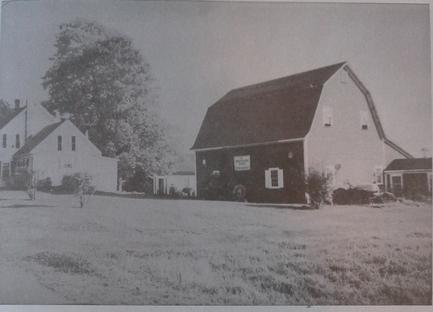
I’m actually writing this about the one grandparent I didn’t know. My mother’s father, Lionel Morin, died before I was born. (On the other side of the family, I am the granddaughter of a small businessman—catering—and a schoolteacher.) My grandfather’s father owned a brickyard in Maine. It shut down well before I was ever thought of, but the bricks that came from it dot the town in New Hampshire where my mother grew up, where I used to go to visit my grandmother and still go to visit my aunt and uncle. The church we went to for my grandfather’s funeral was made from Morin bricks. I can’t say that he taught me anything about work directly. Instead, what I learned about him came from my grandmother and my mother, who were and are both the kind of women who don’t shy away from hard, physical work as well as incredibly precise household labor (and a whole lot of care work). But a few years ago, my uncle gave me a booklet put together by a man named Edward Vetter (Edward, if you’re out there, I hope you don’t mind me sharing this, and I’d love to talk to you about your research). Vetter had been interested in photography and had collected pictures of the brickyards in Maine. Pictured above is a brickyard from that book. Sarah Jaffe is a reporter & writer. The original version of this story is posted on her Tumblr...

by Leo W. Gerard | Aug 29, 2014 | stories
When Fred Redmond, the Steelworkers’ vice president for human affairs, was a child in Chicago, he and a dozen siblings and cousins spent summers picking cotton for their grandparents in Mississippi. Fred’s great, great grandparents had been slaves. His grandparents, maternal and paternal, were sharecroppers, working other people’s land. The grandkids’ summer farm work helped Fred’s maternal grandparents meet quotas and scrape by. Fred says those summers taught him that sometimes people do not reap the value of their work. In Chicago, Fred’s family found a way workers may secure a fairer share of the profits generated from their labor. That, of course, is collective bargaining. Union membership launched Fred’s family into the middle class, and Fred has devoted much of his life to helping ensure that access to others. Fred’s parents met in Lexington, Miss., where his mother attended high school and his father briefly worked. In 1953, they married and moved to Chicago, where they first stayed with Fred’s uncle, Wilbur Redmond. Fred was born the following year, 1954. His father pumped gas, stocked shelves, swept floors. His mother caught three buses to get to Evanston to clean houses. Still, they struggled. Fred recalls one time his brother asked for a quarter to give to United Way, which his schoolteacher had told him helped poor kids. Their mother explained to them that they were the poor kids, the kids who got their school vaccinations at a clinic where they had to wait all day, the kids whose parents both worked but whose survival still required food stamps. Then, suddenly, Fred’s family experienced a revolution. His father got...

by Dr. Harold Geller | Aug 29, 2014 | stories
My grandparents were farmers. Not so unusual you may think. But what is unusual about the fact that my grandparents were farmers, is that my grandparents were farmers in Brooklyn, New York, a borough of New York City, the largest city in the country. The farm, on which my father grew up, was located on Sheffield Avenue in Brooklyn, not far from the intersection of Pennsylvania Avenue and Flatlands Avenue. Today, that intersection boasts a gasoline station with attached car wash. To make ends meet, as we used to say, my grandfather also worked as a tailor in New York City. My grandfather taught my father how to sew, and my father taught me how to sew. By the way, my grandfather was a member of the tailors’ union. I know it seems that today it might well be considered a burden, but my grandfather was proud to be a union member, back in the first decade of the 20th century, until the day he died in the early 1960’s. In fact, I still recall my father receiving a letter addressed to my grandfather from the union, shortly after my grandfather’s death. The union had not been told that my grandfather had died, and it was left to my dad to inform them of my grandfather’s...
